
What will it cost to publish your book?
Move the sliders and see a real price — no forms, no waiting for a call back. We have assumed a typical first book to start you off.
Estimates, not invoices — but they are the real rates we quote from. Anything unusual we price with you on a call.
Where should we send this quote?
Fill in whichever you prefer — we need at least one to reach you.
We use this to send your quote and follow up once. Nothing else.
What the price covers
One package, not a menu
The figure you see is everything it takes to turn a manuscript into a book somebody can buy — book cover design, isbns, editing, print-ready formatting, 50 printed copies up to 200 pages, and your book listed on daastan.com/store.
There is no separate setup fee, listing fee or per-title charge waiting behind it.
Length is the price
A 150-page paperback comes to Rs 120,000 for 50 copies — Rs 1,125 a copy. Editing and printing both scale with pages, so a shorter book genuinely costs less and the slider shows you exactly how much.
Move it and every figure moves with it. Nothing here is a band you get rounded into.
Already have a print-ready PDF?
Then you are not paying for editing and formatting you do not need. Tick the box on the calculator and the price drops accordingly.
Same for an e-book: no paper, no printing, no delivery.
Questions authors ask us
What size will my book be?
5" x 8" is the standard and suits most novels. A5 and 5.5" x 8.5" are the other options on a short run, and 6" x 9" opens up on a press run. Textbooks are usually larger and children's books often square, so those we quote after a conversation.
What does 80gsm paper mean?
GSM is the weight of the paper. 60gsm is thin, 70gsm is middling and 80gsm is the good stuff — that is what we quote on, in imported cream or white. Cream is easier on the eye for long reading; white looks crisper.
Paperback or hardcover?
Paperback suits most books and is what we anchor on. Hardcover needs at least 100 pages to bind properly and is common for Urdu titles and gift editions. Very short books are pin-bound instead of glued.
Why is colour so much more expensive?
A colour page costs many times a black and white one to print, and it is charged per page of your PDF per copy — so a fully illustrated book multiplies quickly. A few colour plates is usually the sensible middle ground.
How many copies should I print?
Fewer than you think, at first. The honest test is how many readers you already have who will actually buy it. Build the readership, then print at volume — printing 1,000 copies before you have buyers just fills a room with boxes.
What is the difference between digital and press printing?
Short runs are printed digitally: quick, no setup, slightly dearer per copy. Once you are printing 400 or more it goes to press, where the per-page cost drops and 6" x 9" becomes available.
Do I need an ISBN?
Yes, if you want the book sold and legally protected. We file the paperwork with the government for you; it normally takes about a week. An ISBN is included in every one of our packages.
What if my manuscript is handwritten?
That is fine — we accept handwritten and typed manuscripts, in Urdu or English. Handwritten work needs composing first, so tell us at the call and we will price it in.
What is a print-ready file?
A PDF laid out exactly as it will be printed — correct trim size, margins, page numbers and fonts embedded. If you already have one and a finished cover, you only need printing from us. If not, it is part of the package.
Authors who published with us
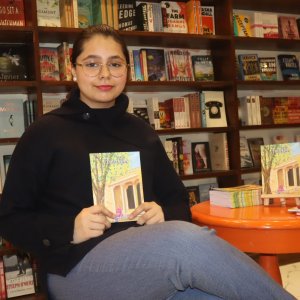
Earlier Pakistani writers could only dream of getting published. Now it is easier with the more than supportive team of Daastan which is now more of a family to me. Amazing experience publishing my first book with Daastan.See the original post
An excellent publishing house with a team of cheerful people that is ever ready to help emerging writers for the love of literature. Wish you success to infinity and beyond!See the original post

A good online approach, where I could hand over my data without the fear that it would be stolen. A safe and secure platform.See the original post
Know what it earns, too
This page tells you what a book costs to make. The royalty calculator tells you what it pays back — same rates, same honesty.
 Login with Google